A roof can look tired long before it is truly ready for replacement. In this shingle conditioner review, the real question is not whether a treatment can make shingles look better. It is whether it can help an aging asphalt roof stay flexible, shed water, and avoid an expensive reroof for a few more valuable years.
For many homeowners in the Greater Fresno Area, that distinction matters. A full replacement can cost $18,000 to $35,000 or more, while a roof that still has sound decking, intact shingles, and no active leaks may have recoverable life left. Shingle conditioning can be a practical middle-ground option, but only when the roof is a good candidate.
What Is a Shingle Conditioner?
Asphalt shingles rely on protective oils and granules to handle heat, sunlight, wind, and rain. Over time, especially under Central Valley sun, shingles can dry out. They may become stiff, lose their rich color, curl at the edges, or shed granules into gutters.
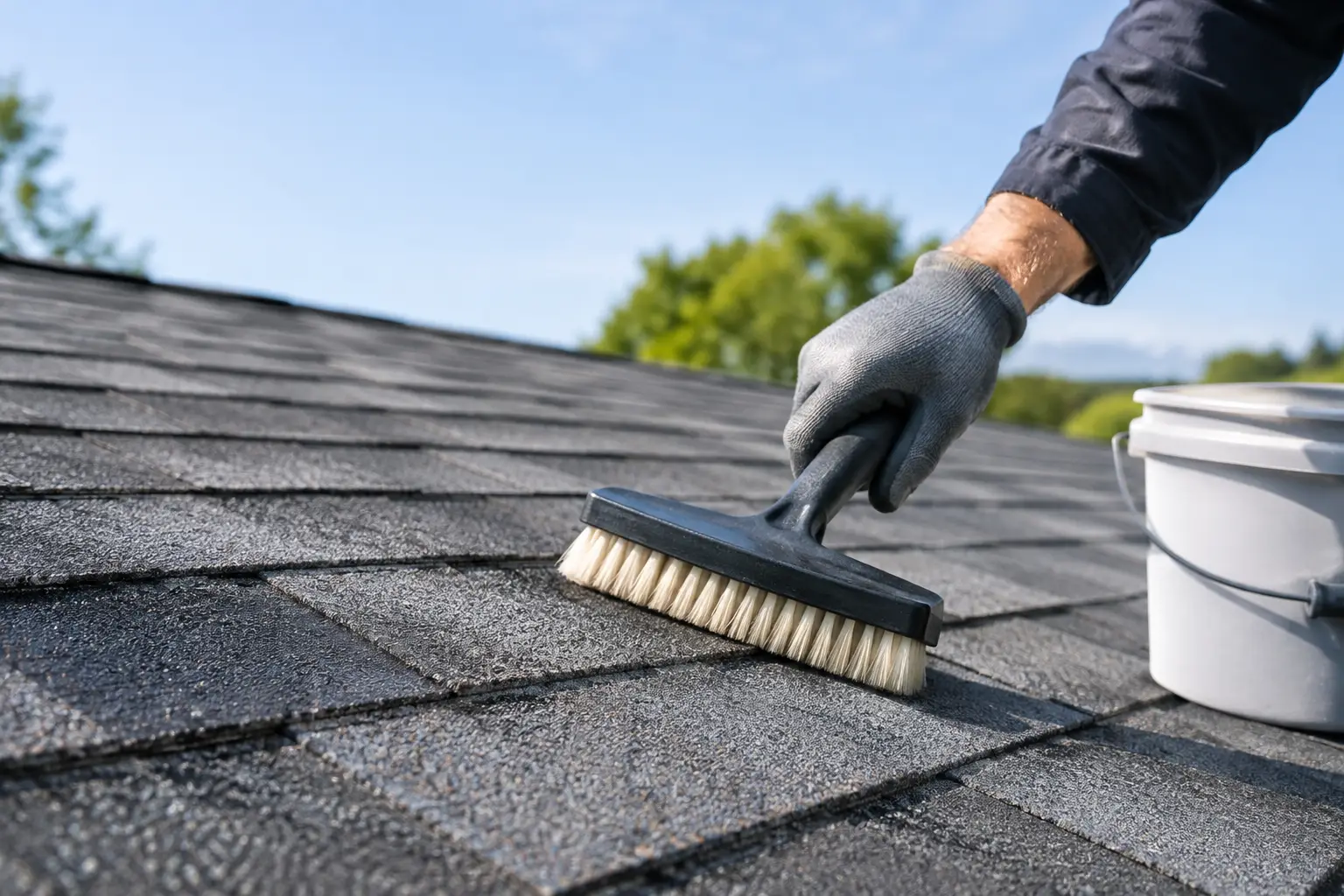
A shingle conditioner is a treatment designed to replenish flexibility and improve the water-shedding performance of weathered asphalt shingles. It is typically applied after the roof is cleaned and inspected. The goal is not to cover up damage with a cosmetic coating. A quality treatment is intended to penetrate and condition shingles that are still structurally serviceable.
That makes this service very different from a reroof. It does not replace missing shingles, repair rotten decking, or solve a roof with widespread leaks. It is maintenance for a roof that has aged, not a rescue plan for a roof that has failed.
Shingle Conditioner Review: What Homeowners Like
The strongest benefit is cost control. When a roof has years of usable life remaining, treating it can cost far less than tearing off and replacing the entire roof. For a homeowner trying to protect a home without taking on a major replacement bill, that difference can bring real relief.
Appearance is another reason people consider treatment. Dry, faded shingles can make an otherwise well-kept home look neglected. Conditioning can improve the roof’s color and uniformity, helping restore curb appeal without the disruption of a replacement project.
There is also a practical performance benefit. Asphalt shingles naturally become more brittle as they age. A conditioner may help restore some flexibility, which matters because brittle shingles are more vulnerable to cracking and damage during weather changes or routine roof traffic. Homeowners often appreciate the idea of addressing wear early rather than waiting for a leak to force a rushed decision.
The service itself is generally lower disruption than replacement. There is no tear-off debris, no long stretch of construction noise, and no need to schedule a major renovation around daily life. For homeowners who are not ready for a reroof but do not want to ignore visible deterioration, that is a meaningful advantage.
Where Shingle Conditioning Has Limits
A trustworthy review should be clear about what a conditioner cannot do. It cannot bond broken shingles back together, replace shingles that have blown away, or fix leaks caused by damaged flashing, failed vents, or worn-out underlayment.
It also cannot make every old roof a good candidate. If shingles are severely curled, extensively cracked, missing large amounts of granules, or nearing the end of their functional life, replacement may be the safer investment. The same is true when there is soft decking, interior water staining, mold from an active roof leak, or repeated repairs across multiple areas.
This is why an inspection matters more than a sales pitch. A company should be willing to tell you if a treatment is not the right answer. Spending less today only makes sense if it helps you avoid spending more on preventable repairs tomorrow.
The best candidates for treatment
Shingle conditioning tends to make the most sense when the roof is weathered but still intact. The shingles should be lying flat overall, the roof should be free of active leaks, and the underlying structure should be sound. Minor aging, fading, dryness, and early granule loss are different from widespread failure.
A roof that is 10 to 20 years old is not automatically a replacement candidate. Lifespan depends on the original shingle quality, ventilation, slope, installation, weather exposure, and maintenance history. Fresno-area roofs often face intense heat and UV exposure, so visual age alone can be misleading.
When replacement is the better call
Replacement is usually the more responsible option when the roof has serious, ongoing damage. That can include broad areas of lifting or missing shingles, multiple active leaks, sagging rooflines, compromised decking, or signs that water has reached the attic or interior walls.
Insurance requirements may also affect the decision. If your insurer has flagged the roof’s condition or requires replacement to maintain coverage, a conditioner may not satisfy that requirement. Ask directly before making any investment based on assumed insurance approval.
What to Ask Before You Schedule Service
Not all roof treatments, applications, or providers are equal. The product matters, but the inspection and preparation matter just as much. Dirt, moss, loose debris, and unaddressed repairs can undermine the result.
Before approving a service, ask whether the roof will be inspected for leaks, damaged shingles, flashing concerns, and structural warning signs. Ask how the surface will be prepared, what the treatment is designed to do, and what results are realistic for your roof’s current condition.
It is also fair to ask about product testing, safety, and environmental considerations. A reputable provider should explain the materials being used in straightforward language and be able to discuss third-party testing where applicable. You should not have to guess what is being sprayed on one of the most important parts of your home.
Finally, ask what the warranty covers. A warranty is useful only when you understand its terms. Does it cover the product, the application, or both? Are there exclusions for pre-existing roof damage? Clear answers help prevent disappointment later.
Is Shingle Conditioner Worth It?
For the right roof, yes. Shingle conditioning can be worth it when it extends the useful life of shingles that are dry and weathered but still capable of protecting the home. The value is especially clear when a homeowner wants to delay replacement, improve curb appeal, and reduce the chance that neglected wear turns into a more expensive problem.
The trade-off is simple: it is not a substitute for replacement when the roof has already crossed into failure. Homeowners should be cautious of anyone promising that a treatment can repair every roof, eliminate all future maintenance, or make severely damaged shingles new again.
The most useful way to think about it is as a roof-life extension service. A properly selected treatment may give you more time to plan and budget for a future replacement, while helping your existing roof perform better in the present. That can be a smart financial move, particularly when the alternative is replacing a roof before it has truly reached the end of its serviceable life.
A Better Next Step Than Guessing
If your roof looks faded, brittle, or worn but is not leaking, do not assume replacement is your only option. A professional assessment can show whether your shingles still have recoverable value or whether repairs or replacement are the safer path.
Roof Shield helps homeowners make that decision with a straightforward inspection and quote process. The focus is on restoring eligible asphalt shingle roofs for a fraction of replacement cost, without pretending that every aging roof should be treated.
A roof does not need to look brand new to protect your home well. It simply needs the right attention at the right stage of its life.