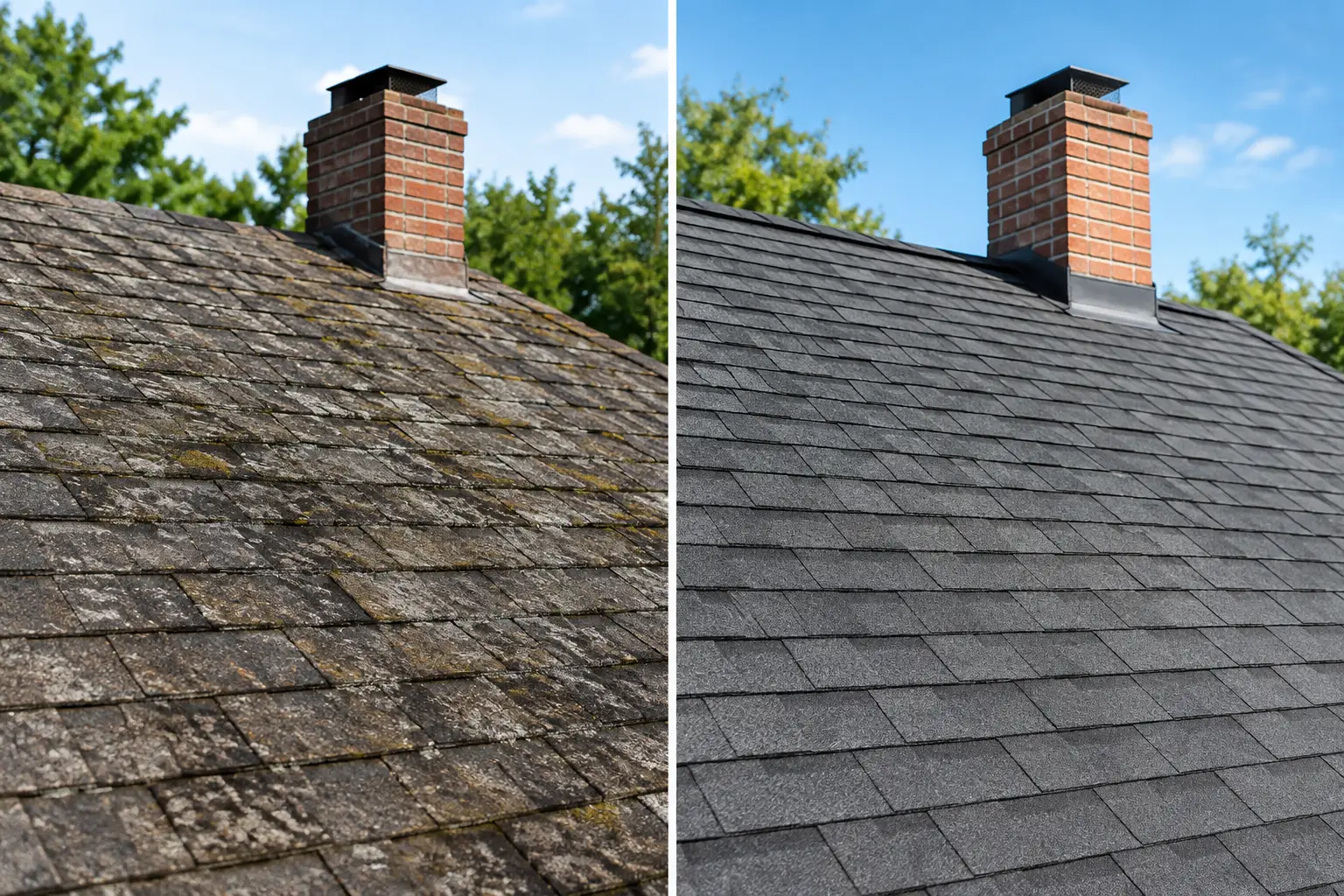
A roof can look tired long before it is ready for the landfill. This aging shingle roof restoration example shows how a homeowner with visible granule loss, fading, and brittle-looking shingles may be able to improve roof performance without taking on the cost and disruption of a full replacement.
For many Central Valley homeowners, the first sign of trouble is not a leak. It is a roof that has lost its color, looks dry and worn, or makes the whole house feel older than it is. The natural reaction is to assume replacement is the only responsible choice. Sometimes it is. But when the roof structure is still sound and shingles have recoverable life left, rejuvenation can be a practical middle ground between doing nothing and spending $18,000 to $35,000 or more on a reroof.
The Starting Point: A Roof That Looked Past Its Prime
Consider a representative home with a 17-year-old asphalt shingle roof. The homeowner had noticed a patchy, faded appearance from the street, especially along the sun-facing slopes. A few shingles had curled slightly at the edges, and the roof felt noticeably drier and less flexible than it once did. Granules were beginning to collect in gutters, although there was no widespread bare mat exposure.
Inside the home, there were no active leaks, water stains, or soft spots in the attic decking. The roofline remained straight. Flashings around vents and penetrations appeared intact, and there was no evidence of major storm damage. Those details matter because a treatment is designed to restore aging shingles that still have structural value. It is not a cover-up for failed decking, serious leaks, missing shingles, or a roof that has reached the end of its usable life.
The homeowner’s concern was simple: replace now at a major expense, or wait and risk further deterioration. A professional roof assessment created a third option – restore and protect the shingles while they were still candidates for rejuvenation.
What This Aging Shingle Roof Restoration Example Included
The work began with a close inspection of the roof’s condition. A qualified technician checks more than curb appeal. The assessment looks for damaged or missing shingles, exposed fiberglass mat, weak or deteriorated roof decking, failed flashing, active leaks, and signs that repairs or replacement should come first.
In this example, minor debris was cleared and the roof surface was prepared so the treatment could perform as intended. The restoration product was then applied evenly to the shingles. The goal was to help replenish lost oils, improve flexibility, support water resistance, and slow the drying effects that California heat and long sun exposure can have on asphalt shingles.
The homeowner did not need to deal with the noise, debris, or extended construction schedule associated with a full tear-off. There were no piles of old shingles in the driveway and no weeks of wondering whether the project would uncover another expensive problem. For a roof that remained structurally sound, that lower-disruption approach was a meaningful benefit.
Before and After: What Changed
The most immediate change was visual. The shingles looked more uniform and less dry, giving the roof a renewed appearance from the curb. The color looked richer, and the surface no longer had the same chalky, weather-beaten look that had concerned the homeowner.
Appearance is only part of the value. As shingles age, they can lose the flexibility that helps them tolerate changing temperatures and ordinary weather exposure. A properly selected rejuvenation treatment is intended to condition qualifying shingles, helping them stay more pliable and better protected.
That does not mean an older roof becomes brand new. It still has its age, previous exposure, and original installation quality. The honest value is in extending useful service life where possible, improving the roof’s appearance, and giving the homeowner time before a replacement becomes necessary.
For this homeowner, the result was relief. Instead of committing immediately to a five-figure reroof, they invested in maintenance at a fraction of replacement cost. Roof restoration can often save homeowners 70 to 80 percent compared with a full replacement, depending on the roof’s size, condition, and the scope of any needed repairs.
Why Restoration Made Sense in This Case
The decision came down to condition, not just age. A roof can be 15, 18, or even 20 years old and still be a viable candidate if the shingles, decking, and critical roof components are holding up well. On the other hand, a younger roof with poor installation, storm damage, or ongoing leaks may need repairs or replacement sooner.
This example had several positive signs: no active leak history, no major shingle failure, no widespread exposed mat, and no signs of structural problems beneath the shingles. The homeowner wanted to be proactive rather than wait until small signs of wear became a much larger project.
That timing is often where roof rejuvenation delivers its best value. Waiting until shingles are cracking extensively, blowing off, or allowing water into the home may leave fewer options. Addressing visible aging while the roof is still serviceable can help protect the investment already sitting over your home.
When Roof Restoration Is Not the Right Answer
A trustworthy assessment should also explain when treatment is not appropriate. Restoration is not a substitute for a roof replacement when there is widespread shingle loss, severe curling, significant exposed fiberglass, major hail or wind damage, failed decking, or persistent water intrusion.
It also cannot correct underlying ventilation issues, improper installation, or damaged flashing by itself. Those concerns need to be identified and addressed. The right recommendation is not always the cheapest one. It is the one that protects the home and makes financial sense based on the actual condition of the roof.
That is why a quick glance from the driveway is not enough. Two roofs of the same age can have very different needs. Sun exposure, attic ventilation, maintenance history, tree cover, prior repairs, and the original shingle quality all affect whether rejuvenation is a smart next step.
What Homeowners Should Look For
If your asphalt shingle roof is showing its age, look for changes in color, a dry or brittle appearance, granules in gutters, minor edge curling, or an overall loss of curb appeal. These signs do not automatically mean your roof has failed. They do mean it is worth getting an informed opinion before deterioration advances.
Take note of more serious warning signs as well. Water stains on ceilings, missing shingles, sagging rooflines, frequent leaks, or visible areas where shingle material is badly worn away call for prompt professional attention. In those cases, restoration may not be the right path, but knowing early gives you more control over the decision.
For homeowners in Fresno, Clovis, and nearby Central Valley communities, heat and intense sunlight can make roof aging feel inevitable. It may be inevitable over time, but an aging roof does not always need an immediate replacement. The right assessment can separate normal wear from a true end-of-life roof.
Start With a Clear Roof Assessment
The lesson from this aging shingle roof restoration example is not that every worn roof should be treated. It is that appearance alone should not force a costly replacement decision. A careful inspection can reveal whether the roof has recoverable life and whether a restorative treatment can improve its condition at a far lower cost.
Roof Shield helps homeowners evaluate aging asphalt shingle roofs with a straightforward, no-pressure approach. If your roof looks worn but is not leaking or failing, request a free inspection and quote before committing to replacement. A little clarity now can protect your home, your curb appeal, and your budget for years to come.