A roof can look tired long before it is ready for the landfill. In the Central Valley, relentless sun, dry heat, and seasonal weather swings can leave asphalt shingles faded, brittle, and visibly worn. When homeowners start researching roof coating versus rejuvenation, they are usually looking for the same thing: a way to protect their home without taking on a $18,000 to $35,000 roof replacement too soon.
The right answer depends on what your shingles need, what condition the roof deck is in, and whether the roof has enough recoverable life left to justify treatment. Coating and rejuvenation are not interchangeable services. One creates a layer over a roof surface. The other is designed to help aging asphalt shingles regain some of the properties they lose over time.
Roof Coating Versus Rejuvenation: The Core Difference
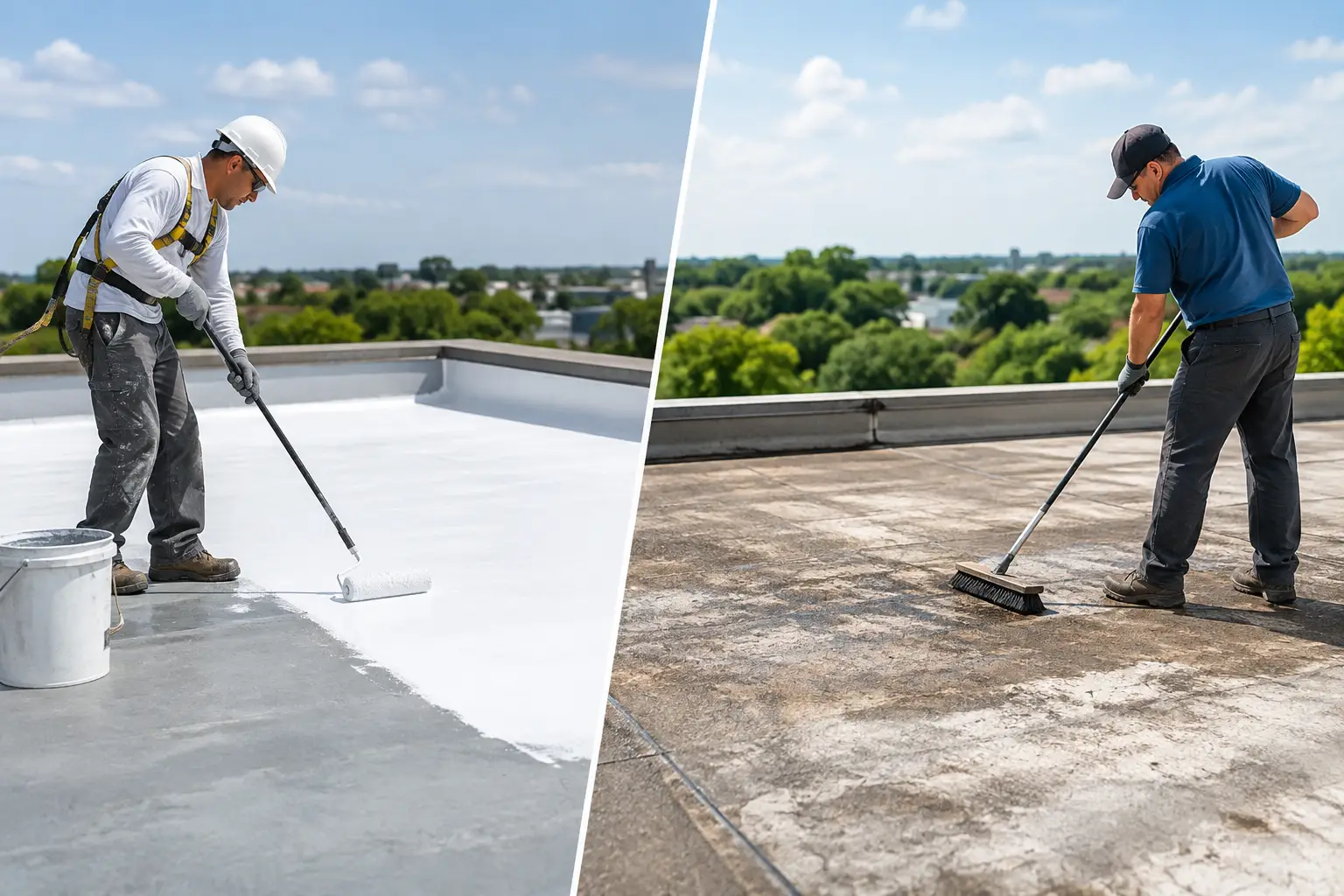
A roof coating is a liquid-applied material that cures into a protective surface layer. Coatings are commonly associated with flat or low-slope roofing systems, including commercial roofs and some residential structures. Depending on the product and application, a coating may help reflect sunlight, reduce surface exposure, and seal small imperfections.
Roof rejuvenation takes a different approach. Rather than covering shingles with a new top layer, a rejuvenation treatment is applied to aging asphalt shingles after the roof is properly cleaned and inspected. The purpose is to restore flexibility and water resistance to shingles that have dried out from years of sun exposure.
That distinction matters. Asphalt shingles are built to shed water in overlapping layers. They are not designed to perform like a flat roof membrane. A coating may change the appearance of a shingle roof, but it does not necessarily address the underlying dryness and loss of pliability that occur as shingles age.
For a Fresno-area homeowner with an older shingle roof, rejuvenation can be the more natural fit when the roof is worn but still structurally sound. It is a practical middle ground between doing nothing and replacing a roof that may still have usable life.
When Roof Coating May Make Sense
Roof coating can be a sensible option in certain circumstances. It is often used on roofing systems with broad, continuous surfaces where a coating can form a consistent barrier. A low-slope roof over a patio, garage, or commercial building may be a better candidate for coating than a traditional pitched asphalt shingle roof.
A coating may also be considered when a roof has specific surface-level exposure concerns and the roofing material is compatible with the selected product. Compatibility is the key word. Applying the wrong material to a roof can trap moisture, interfere with drainage, affect the appearance of the shingles, or complicate future repairs.
For a steep-slope asphalt shingle roof, a homeowner should be cautious about any solution that promises to simply paint over visible wear. Shingles that are curled, cracked, missing, or leaking due to failed flashing do not become structurally sound because a new layer has been applied over them. The roof needs an honest assessment first.
When Rejuvenation Is the Better Fit
Rejuvenation is designed for asphalt shingle roofs that show age but have not reached the point of failure. Common signs include fading color, a dry or weathered appearance, loss of flexibility, and shingles that look older than the rest of the home. These concerns can affect curb appeal, but they can also signal that shingles are becoming less able to handle water and temperature changes.
A professional rejuvenation service begins with an evaluation. The roof should be free of major active leaks, extensive missing shingles, severe curling, compromised decking, and widespread damage. If those issues are present, repair or replacement may be the responsible recommendation.
When the roof is still a candidate, cleaning removes built-up debris and prepares the surface for treatment. The rejuvenating treatment is then applied to help restore shingle flexibility, improve water resistance, and refresh the roof’s appearance. The result is not a brand-new roof, and trustworthy contractors should never present it that way. It is a maintenance-based solution intended to help a recoverable roof last longer.
That can bring real relief to homeowners who are not ready for a full reroofing project. Roof Shield helps qualified homeowners extend the service life of aging shingle roofs for a fraction of replacement cost, often creating savings in the range of 70% to 80% compared with a full replacement.
Cost, Disruption, and Long-Term Value
The biggest difference homeowners notice in roof coating versus rejuvenation is often cost. Full replacement involves removing existing roofing materials, handling disposal, purchasing new shingles and underlayment, and paying for a larger labor project. It can also bring noise, debris, driveway congestion, and several days of disruption.
A rejuvenation treatment is typically far less invasive. There is no tear-off when the existing roof is a suitable candidate, and the project is generally completed with much less disruption to daily life. For homeowners managing a household budget, preparing for retirement, or protecting savings for other priorities, that difference can be substantial.
Still, lower upfront cost should not be the only consideration. A treatment is valuable when it delays a replacement that would otherwise be premature. It is not valuable if it is used to avoid necessary repairs on a roof that has already failed. The goal is to spend wisely, not simply spend less.
Coatings have their own cost variables, including roof design, product selection, surface preparation, and the condition of the existing roofing system. On a roof type that is well suited for coating, the investment may make sense. On an aging asphalt shingle roof, rejuvenation may offer better value because it is tailored to the material already protecting your home.
Appearance Matters, But Condition Matters More
A faded roof can make an otherwise well-kept home look dated. That is frustrating when you take pride in your property, especially in neighborhoods where exterior upkeep supports home value and curb appeal. Both coatings and rejuvenation can affect how a roof looks, but appearance should never be the sole reason for choosing a service.
A coating can create a more uniform surface color, although the result depends heavily on the product and roof type. Rejuvenation typically refreshes the existing color and character of the shingles instead of masking them with a new finish. Homeowners often appreciate that the roof looks healthier without looking artificially altered.
More importantly, rejuvenation focuses on the condition behind the appearance. When shingles have dried out under years of Valley sun, restoring flexibility and water-shedding performance can be more meaningful than simply changing their color.
Questions to Ask Before Choosing Either Option
Before approving a coating, rejuvenation treatment, or replacement, ask what condition the roof is actually in. A good contractor should be able to explain whether there are active leaks, damaged flashing, missing shingles, soft areas, or signs that the roof deck may be compromised.
Ask whether the proposed product is appropriate for asphalt shingles and whether the contractor has experience with roofs like yours. You should also ask what preparation is included, what results are realistic, and whether the service is intended to maintain a roof or solve an existing failure.
Finally, ask for a clear explanation of the cost difference between treating the roof now and replacing it now. A homeowner should never be pressured into a replacement simply because a roof looks old. At the same time, no one should be sold a treatment that delays repairs a roof truly needs.
A Clearer Next Step for Aging Shingles
If your asphalt shingle roof is showing its age but has not developed major damage, rejuvenation deserves a closer look. It can be an affordable way to protect your home, improve curb appeal, and postpone the financial shock of replacement. For roofs with structural concerns or advanced failure, replacement may still be the safer path.
The most useful next step is not guessing from the ground. Schedule a professional roof assessment and get a straightforward answer about whether your shingles can be revived. A little clarity now can help you protect your home and keep more control over when, and how, you invest in a new roof.