A roof can look worn out long before it is truly ready for replacement. This Clovis roof cleaning case study illustrates a situation many local homeowners face: dark streaks, dull shingles, and a roof that makes the entire home look older – followed by a replacement quote that feels far beyond what the roof’s actual condition may require.
For homeowners with aging asphalt shingles, the right answer is not always to do nothing or commit to a costly reroof. When the roof structure is still sound, cleaning and rejuvenating the shingles can be a practical way to improve appearance, restore protection, and postpone a major expense.
The Clovis homeowner’s concern
This representative case reflects the type of roof assessment commonly seen in established Clovis neighborhoods. The home had an older asphalt shingle roof with visible discoloration, accumulated debris along roof edges, and shingles that appeared dry and weathered from years of Central Valley sun.
From the street, the roof looked like a replacement candidate. The homeowner was concerned that the stains signaled serious damage, and they also worried about what an aging roof might mean for curb appeal, future leaks, and insurance conversations. A full replacement had been discussed, but the estimated cost was difficult to justify without clear evidence that the roof had failed.
That distinction matters. Surface discoloration and weathered-looking shingles can be frustrating, but they are not automatically proof that a roof needs to be torn off. A careful inspection should separate cosmetic aging from conditions that make replacement necessary.
Inspection came before cleaning
A responsible roof cleaning case study starts with what was checked before any treatment was recommended. The roof needed to be evaluated for active leaks, widespread missing shingles, severe curling, structural sagging, failed flashing, and areas with damaged decking underneath.
In this scenario, the inspection found a roof with recoverable value. The shingles showed age and dryness, but the roof was not experiencing broad structural failure. There were no signs that the home needed an immediate reroof simply because the surface looked tired.
That is the point where homeowners can breathe easier. A roof does not need to look brand-new to keep serving its purpose. It does, however, need to be stable enough for a restoration-focused service to make sense.
If an inspection reveals significant storm damage, active leaking, failing roof decking, or shingles that have reached the end of their useful life, cleaning is not a substitute for repairs or replacement. The goal is never to cover up a serious issue. It is to protect a roof that still has life left in it.
Why cleaning alone was not the full answer
The visible staining was a major concern, but appearance was only part of the problem. Aging shingles can gradually lose the oils that help them remain flexible and water-resistant. Fresno-area heat, sun exposure, wind, and seasonal debris all add stress over time.
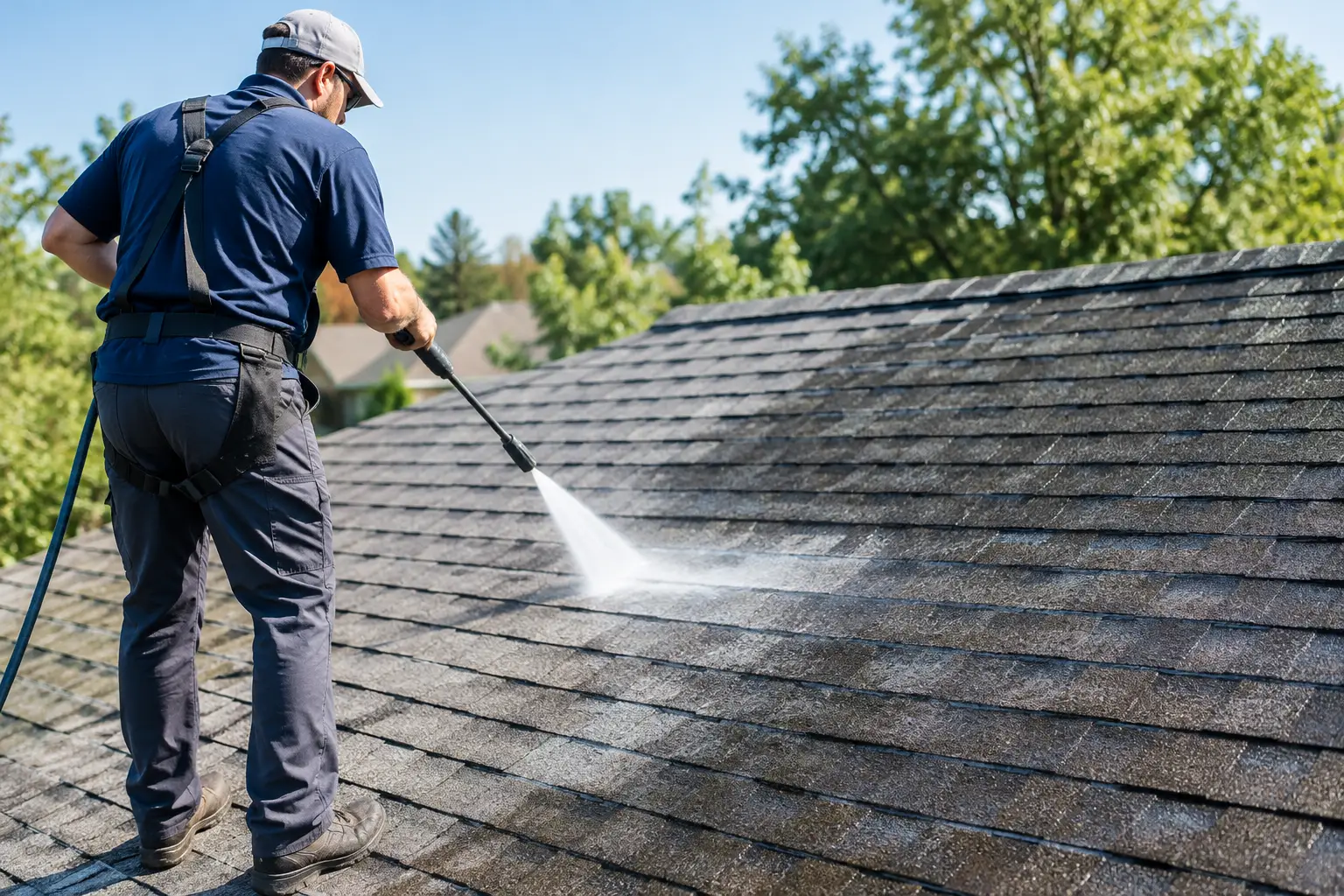
Cleaning can remove buildup and improve the roof’s appearance, but a harsh approach can create more trouble than it solves. High-pressure washing, for example, can dislodge protective granules and may shorten the life of fragile, aging shingles. A roof should never be treated like a driveway.
For this type of recoverable roof, the better approach is gentle, roof-appropriate cleaning followed by a specialized rejuvenation treatment. The cleaning addresses the surface-level grime and discoloration. The treatment is designed to restore flexibility and help improve water resistance in weathered asphalt shingles.
That combination makes the difference between a roof that merely looks cleaner and one that is being maintained for continued performance.
The treatment process
After confirming that the roof was a fit for rejuvenation, the service focused on careful preparation and controlled application. Loose debris was addressed, roof surfaces were cleaned using methods appropriate for asphalt shingles, and the shingles were allowed to be properly evaluated before treatment.
The rejuvenation product was then applied to the roof surface to condition the aging shingles. The goal was not to hide defects with a coating or make unrealistic promises about a roof’s condition. It was to help restore the characteristics shingles lose as they dry out over time.
For a homeowner, the process offered a few clear advantages. It was far less disruptive than a full tear-off, avoided the noise and debris of a reroofing project, and preserved a roof that still had recoverable structural value. Most importantly, it allowed the homeowner to address the problem before it became more expensive.
Roof Shield uses a treatment approach supported by third-party Intertek lab testing, giving homeowners more confidence that roof rejuvenation is based on more than a cosmetic improvement. Results depend on the roof’s age, condition, slope, previous repairs, and sun exposure, which is why an assessment comes first.
Before and after: What changed
The most immediate difference in a roof cleaning and rejuvenation project is usually visual. The roof can look cleaner, more uniform, and better cared for. That matters when a homeowner takes pride in the property or is thinking ahead to resale.
But the more meaningful improvement is less obvious from the curb. By treating a roof before deterioration accelerates, homeowners may improve shingle flexibility and water resistance while extending the period before replacement becomes necessary.
This does not mean an aging roof becomes new again. It means the homeowner has a sensible middle-ground option when the roof is worn but not failed. That is often the missing choice between ignoring visible decline and spending tens of thousands of dollars on a complete replacement.
The cost conversation homeowners need to have
A full reroof can cost $18,000 to $35,000 or more, depending on the home, materials, roof complexity, and needed repairs. For a homeowner whose roof remains structurally sound, that is a large investment to make simply because the shingles look old or stained.
Roof rejuvenation can often cost 70% to 80% less than replacement. Those savings are meaningful, especially for homeowners balancing other maintenance needs, rising insurance costs, or plans to stay in the home for several more years.
The trade-off is straightforward: rejuvenation is not a permanent replacement for a roof that has truly failed. It is a maintenance and life-extension strategy for a qualifying asphalt shingle roof. Homeowners should be wary of anyone who claims every roof can be saved, because that is simply not true.
A trustworthy recommendation should explain why the roof qualifies, what the service can reasonably accomplish, and what signs would indicate that replacement is eventually needed.
Is your roof a candidate?
A roof may be a good candidate when shingles are weathered, dry, stained, or losing their curb appeal but remain generally intact. It may also make sense for homeowners who want to avoid the disruption of replacement and take a prevention-minded approach to roof care.
A roof may not be a candidate if it has active leaks, widespread shingle loss, extensive curling or cracking, serious storm damage, major flashing issues, or underlying structural concerns. Age alone does not decide the answer. Condition does.
That is why a free roof assessment is more useful than guessing from the driveway. It gives you a clearer answer about whether cleaning and rejuvenation can help protect your home or whether repairs or replacement should be the next step.
A better next step than waiting
Dark stains and tired-looking shingles do not have to force an immediate replacement decision. For many Greater Fresno homeowners, the smarter first move is finding out whether the roof still has recoverable life.
A professional assessment can replace uncertainty with a clear plan – whether that means rejuvenation now, targeted repairs, or preparing for a future reroof on your own timeline. If your Clovis roof is showing its age, request a free inspection before assuming replacement is your only option.