A brown water spot on the ceiling creates an immediate question: should you repair leaks or restore roof shingles before the problem grows? For many Central Valley homeowners, the right answer is not automatically a costly replacement. A targeted repair can stop active water intrusion, while roof rejuvenation may help an aging asphalt shingle roof regain the protection and appearance it has lost over time.
The key is knowing what your roof is telling you. A leak is an urgent symptom. Worn, dry, faded shingles are a condition that may still be treatable. Addressing both at the right time can protect your home, reduce stress, and help you avoid replacing a roof that still has usable life left.
Start With the Leak, Not the Stain
Ceiling stains, damp insulation, peeling paint, or a musty attic smell deserve prompt attention. Water rarely enters a home directly above the visible stain. It can travel along roof decking, rafters, or insulation before showing itself inside.
A professional roof assessment can identify whether the issue comes from missing shingles, damaged flashing, cracked pipe boots, exposed nail heads, valleys, vents, or another weak point. The goal is to repair the actual entry point, not simply patch the interior evidence.
A small, isolated leak does not necessarily mean your whole roof has failed. If the roof deck is sound and damage is limited to a particular area, a focused repair may be all that is needed. Waiting, however, can turn a manageable repair into damaged decking, insulation replacement, mold concerns, or interior drywall work.
When Repairing a Leak Makes Sense
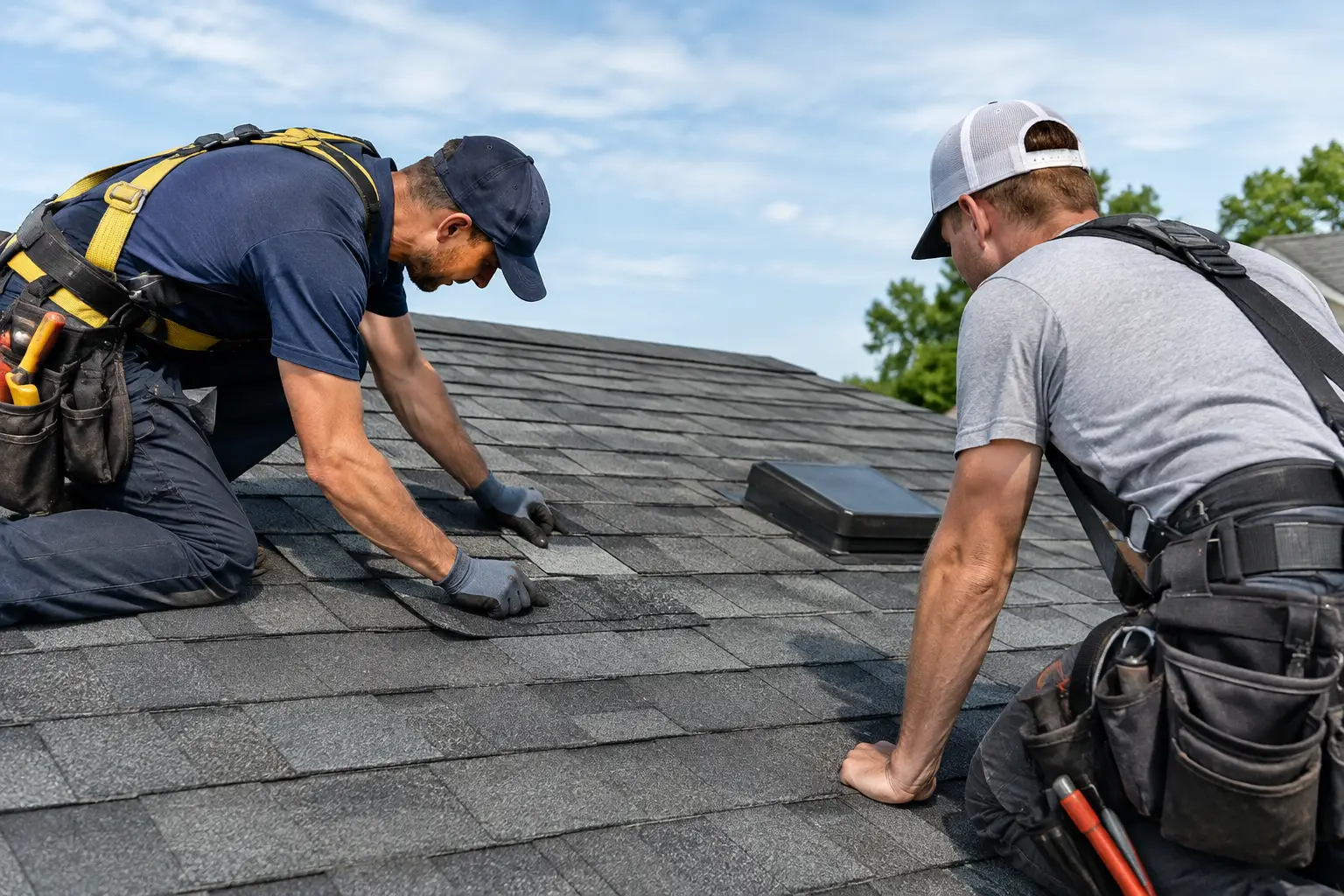
Leak repair is generally the first move when a roof has a specific failure point but remains in reasonably good overall shape. For example, a loose flashing detail around a chimney or a worn rubber boot around a plumbing vent can allow water in even when surrounding shingles still have plenty of service life.
Repairs are also sensible after wind damage or when a small number of shingles have lifted, cracked, or blown off. In these cases, the focus is on restoring the roof’s water-shedding system where it has been interrupted.
There is a trade-off. Repeated spot repairs on a roof with widespread aging may become frustrating and expensive. A repair can stop today’s leak, but it cannot reverse shingles that have become brittle across the entire roof surface. If granules are thinning, edges are curling, and the roof looks consistently dry and weathered, it may be time to look beyond patching one area at a time.
When to Restore Roof Shingles Instead
Roof restoration, often called rejuvenation, is designed for aging asphalt shingles that are worn but still structurally recoverable. Fresno-area heat, long dry seasons, and sun exposure can pull essential oils from shingles. As they lose flexibility, shingles may look faded, feel brittle, and become more vulnerable to cracking and moisture intrusion.
A professional restoration treatment cleans the roof and applies a specialized solution intended to replenish flexibility and improve water resistance. It is not a cover-up for serious roof failure, rotten decking, or active widespread leaks. It is a practical middle-ground option for a roof that is aging visibly but is not yet at the end of its functional life.
For the right roof, restoration can improve curb appeal while helping extend the life of existing shingles. That matters when a full reroof can cost tens of thousands of dollars and create days of noise, debris, and disruption around your home. Homeowners may be able to protect a recoverable roof for substantially less than replacement, often saving 70 to 80 percent compared with a full reroofing project.
Repair Leaks or Restore Roof: Often, the Answer Is Both
These choices are not always opposites. A roof can have one repairable leak and also show broad signs of age. In that situation, the smart order is straightforward: repair the source of the leak first, confirm the roof is dry and structurally sound, then determine whether rejuvenation is appropriate for the remaining shingles.
This approach addresses the immediate risk without ignoring the roof’s larger condition. It gives homeowners a clearer picture of what they are paying for and why. Rather than treating every aging roof as an emergency replacement, you can make a decision based on its actual condition.
A good inspection should distinguish between a local defect and a system-wide problem. It should also explain the limits of restoration honestly. If shingles are severely deteriorated, decking is compromised, or leaks are occurring in multiple areas, replacement may be the safer long-term choice. No treatment should be presented as a substitute for necessary structural work.
Signs Your Roof May Still Be a Good Restoration Candidate
An assessment is the only reliable way to determine eligibility, but several signs can point toward a roof that may still have recoverable value. The shingles may appear faded and dry, with some loss of flexibility, while remaining generally intact and properly installed. There may be minor repair needs but no evidence of widespread water damage or failing roof decking.
Age alone is not the deciding factor. Two roofs installed in the same year can perform very differently depending on sun exposure, ventilation, past repairs, storm damage, and maintenance history. A roof that looks old from the street may still have a solid foundation for rejuvenation. Conversely, a roof that looks acceptable from the ground may have hidden issues that require more extensive work.
That is why a free roof assessment can be more valuable than a quick estimate based on photos alone. You deserve an answer built around the condition of your home, not a one-size-fits-all sales pitch.
Avoid These Costly Delays
Homeowners often put off roof decisions because they fear being pushed into replacement. That hesitation is understandable, especially when replacement estimates can range from $18,000 to $35,000 or more. But ignoring an active leak rarely saves money. Water has a way of expanding the scope of a problem.
Avoid relying on interior caulk, paint, or a bucket as a long-term solution. Those measures may manage the symptoms for a short time, but they do not stop water at the roofline. It is also wise to avoid applying coatings or sealants without knowing whether the shingles and underlying roof system are suitable. The wrong fix can create new concerns or mask evidence a professional needs to evaluate.
Instead, act while you still have options. Early inspection can reveal whether a simple repair, a repair plus rejuvenation, or a full replacement is the most sensible investment.
A More Affordable Path for Aging Shingles
Roof Shield helps homeowners evaluate aging asphalt shingle roofs with a practical, no-pressure mindset. The purpose is not to sell replacement when a roof can still be revived. It is to identify whether your roof can be cleaned, restored, and protected so you can get more life from the system you already own.
For homeowners in Fresno, Clovis, and surrounding communities, that can mean relief from the sticker shock of a premature reroof. It can also mean better curb appeal, improved confidence during weather changes, and a clearer plan for maintaining one of your home’s most important protective systems.
The Best Next Step Is a Clear Inspection
If you see a ceiling stain, missing shingles, fading, curling, or widespread dry-looking granules, do not guess at the cause or assume replacement is your only option. Request a professional assessment that looks at the leak risk, shingle condition, roof structure, and realistic remaining life.
A roof that needs a small repair today may be a strong candidate for restoration tomorrow. Taking action now gives you the best chance to protect your home, control costs, and make a decision you can feel good about.