A roof can look faded, brittle, or streaked with age long before it has reached the point of failure. That is why the choice between reroofing versus restoration deserves more than a quick glance at the lowest quote. For many Fresno-area homeowners, the right answer depends on what is happening beneath the shingles, not just what the roof looks like from the curb.
A full reroof can be necessary, especially when a roof has active leaks, extensive damage, or structural concerns. But if the shingles are aging without major failure, restoration may offer a practical way to improve protection, appearance, and performance while avoiding the cost and disruption of replacement.
What Reroofing Actually Means
Reroofing generally means installing a new layer of shingles over an existing roof or, in some cases, removing the old roofing material and replacing it entirely. The term is often used loosely, so homeowners should always ask whether a contractor is proposing an overlay or a complete tear-off and replacement.
A reroof can give a home a fresh appearance and a new roofing surface. When the roof is near the end of its useful life, shingles are missing in multiple areas, or leaks have become a repeated issue, replacement may be the responsible path forward.
The trade-off is cost. Full replacement projects can commonly run from $18,000 to $35,000 or more, depending on roof size, materials, pitch, access, repairs needed beneath the shingles, and local labor costs. The work also creates noise, debris, and disruption around the home.
That expense can be worthwhile when replacement is truly needed. The problem comes when homeowners replace a roof that still has recoverable value simply because it looks old or feels dry to the touch.
What Roof Restoration Is Designed to Do
Roof restoration, sometimes called roof rejuvenation, is intended for aging asphalt shingle roofs that are still structurally sound. Rather than covering up the existing roof with new materials, the process focuses on cleaning the roof and applying a specialized treatment designed to restore flexibility, improve water resistance, and protect shingles that have become dry from years of sun exposure.
In the Central Valley, that sun exposure matters. Long, hot summers can pull essential oils from asphalt shingles over time. As shingles dry out, they may become less flexible, lose granules more easily, and look worn well before the roof is beyond saving.
A quality restoration service addresses this stage of aging. It can refresh the roof’s appearance while helping preserve the shingles that are already doing their job. For an eligible roof, restoration can cost 70% to 80% less than a full reroofing project.
That does not mean restoration is a shortcut for every roof. It is a targeted solution for homeowners who want to maintain an aging roof before small signs of wear become costly problems.
Reroofing Versus Restoration: The Biggest Differences
The central difference is simple: reroofing replaces or covers existing roofing materials, while restoration works to extend the useful life of shingles that remain in serviceable condition.
Reroofing is usually the better choice when the roof has extensive storm damage, widespread missing shingles, persistent leaks, sagging roof decking, major flashing problems, or signs that water has reached the structure below. A treatment cannot repair rotten wood, solve ventilation failures, or make a severely damaged roof safe.
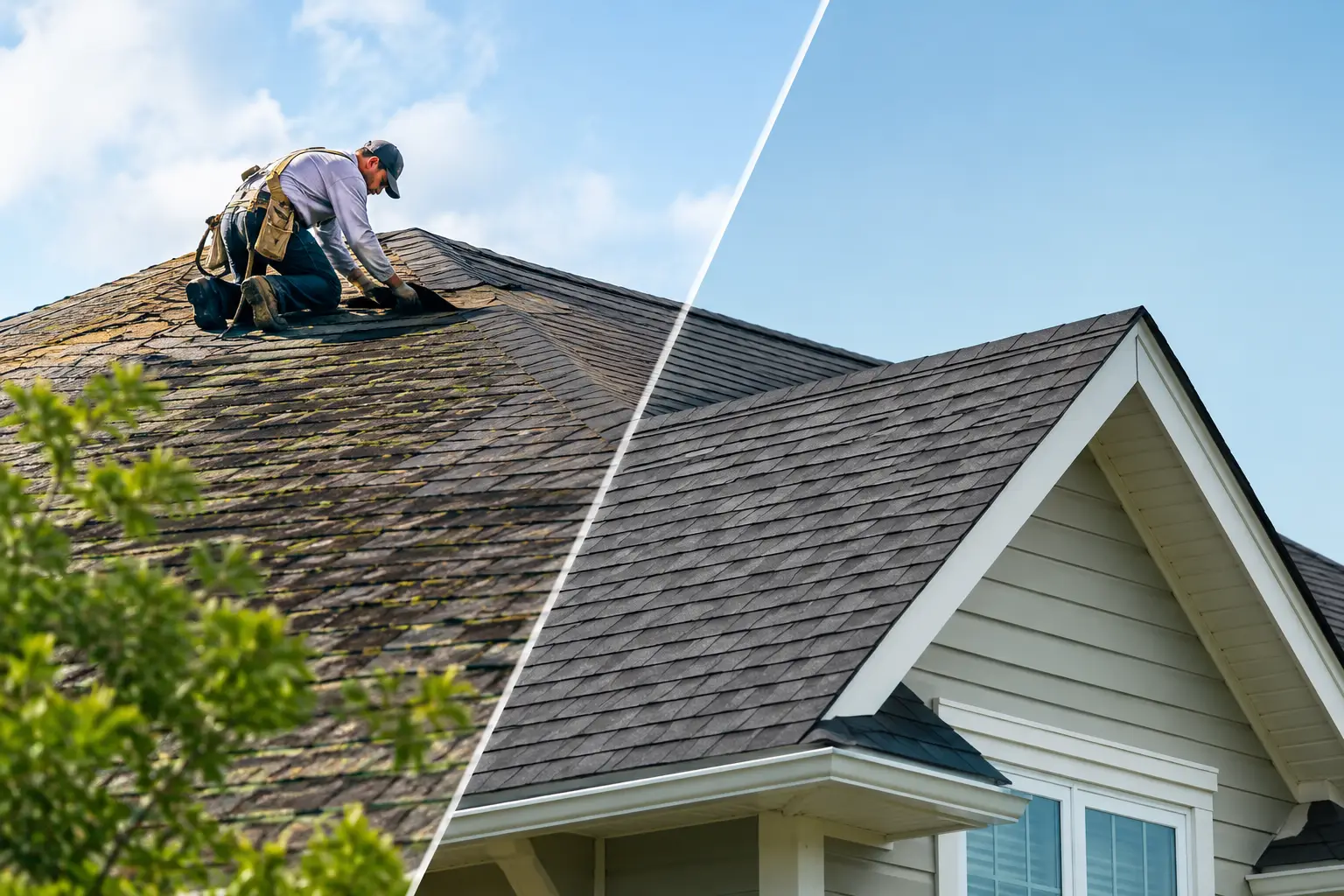
Restoration is often worth considering when shingles are visibly aging but mostly intact. A roof may have fading, surface dryness, minor granule loss, or a dull appearance while still providing a sound foundation for rejuvenation. The goal is not to pretend the roof is new. The goal is to protect its remaining life and delay a major expense when replacement is not yet necessary.
This is why an honest inspection matters. The right provider should be willing to tell you when your roof qualifies for restoration and when it does not.
When Restoration Can Be the Smarter Financial Choice
Homeowners often assume an older roof automatically needs replacing. Age is a factor, but it is not the only factor. Two roofs installed in the same year can be in very different condition based on sun exposure, attic ventilation, maintenance history, tree coverage, and prior repairs.
Restoration may be a strong option if your roof has no active leaks, no major structural damage, and no widespread shingle failure. It can also make sense for homeowners planning to remain in their home and wanting to protect their budget without putting roof maintenance off any longer.
There is a practical benefit beyond upfront savings. A restoration project is usually far less disruptive than a full replacement. There is no tear-off debris around the property, no days of heavy installation noise, and no need to commit to a replacement project before the roof has truly earned it.
For homeowners concerned about curb appeal, restoration can also help revive a weathered-looking roof. A cleaner, better-maintained roof can make a noticeable difference in how a home presents from the street.
When a Full Reroof Is the Better Call
A restoration service should never be sold as a fix for a roof with serious underlying damage. If an inspection reveals active water intrusion, soft areas in the decking, severe curling or cracking across large sections, repeated repair history, or widespread shingle loss, full replacement may be the safer investment.
Insurance requirements can also influence the decision. Some policies, lenders, or buyers may have specific expectations for roof condition. If you are preparing to sell your home soon, a new roof may carry more appeal in certain situations. Still, it is worth getting a professional assessment before assuming replacement is the only path.
A roof can be old without being failed. On the other hand, a roof can be relatively young and still need replacement if damage has compromised its performance. Condition should lead the decision, not age alone.
Signs It Is Time to Schedule an Inspection
You do not need to climb onto your roof to know it deserves attention. A professional roof assessment is especially worthwhile when you notice several of these changes:
- Shingles look dry, faded, or noticeably worn from the street.
- Granules are collecting in gutters or near downspouts.
- The roof has dark staining, algae, or uneven color.
- Shingle edges are beginning to curl or lose their flat appearance.
- You have concerns after high winds, extreme heat, or a recent leak.
These signs do not automatically mean you need a reroof. They are signals to find out whether maintenance and restoration can still protect the roof you have.
Questions to Ask Before You Choose
Before approving either option, ask what condition the decking, flashing, vents, and penetrations are in. Ask whether there are active leaks or soft spots. Ask how much usable life the contractor believes remains in the current shingles and why.
You should also request clarity on scope. If you are considering reroofing, confirm whether old shingles will be removed, how damaged decking will be handled, and what warranty applies. If you are considering restoration, ask how the roof will be cleaned, what treatment will be used, and whether the service is appropriate for your roof’s present condition.
At Roof Shield, the focus is on helping homeowners understand whether their aging asphalt shingles still have recoverable life. A straightforward inspection can replace guesswork with a realistic recommendation and a clear price before a small concern turns into a larger one.
A Better Decision Starts Before the Roof Fails
Waiting until water appears on the ceiling limits your options. By then, restoration may no longer be appropriate, and replacement may become unavoidable. Acting when the roof first starts to show dryness, fading, and surface wear gives you more control over both timing and cost.
If your shingles are aging but your roof is still sound, a professional assessment can help you protect your home, improve its appearance, and keep more money available for the things that matter inside it. The best next step is not to assume you need the most expensive solution. It is to find out what your roof actually needs.