A weathered roof can raise uncomfortable questions long before it leaks: Will my insurer renew my policy? Will I be denied coverage? Does roof treatment help insurance, or is replacement the only option? For many Central Valley homeowners, a professional roof rejuvenation treatment can improve the condition and appearance of a qualifying asphalt shingle roof, which may help address insurer concerns. But it is not an insurance guarantee, and it does not make an old roof new.
The practical answer is this: insurance companies generally care about a roof’s condition, remaining service life, and ability to protect the home. If treatment restores flexibility, improves water resistance, and helps shingles perform better, it can be a positive part of your roof maintenance record. Whether that changes your premium, renewal, or eligibility depends on your carrier and the roof itself.
What Insurance Companies See When They Inspect a Roof
Insurance underwriting is not just about the roof’s age. Carriers often review aerial imagery, inspection reports, prior claims, and visible signs of deterioration. Curled shingles, widespread granule loss, exposed areas, moss or debris buildup, and obvious patching can all suggest a higher risk of water damage.
In Fresno and surrounding communities, intense sun and heat can dry out asphalt shingles faster than homeowners expect. A roof may look faded, brittle, or uneven even when it has not reached the point of total failure. That distinction matters. A roof with recoverable wear is different from a roof with active leaks, structural damage, or missing shingles across large areas.
An insurer may request proof that a roof is in acceptable condition before issuing or renewing a policy. In some cases, the company may ask for a roof inspection, a repair invoice, or updated photos. A documented treatment can be useful evidence that you took action rather than allowing an aging roof to deteriorate.
Does Roof Treatment Help Insurance Eligibility?
Roof treatment may help insurance eligibility when it improves a roof that is still structurally sound and capable of being restored. The key word is “may.” A carrier decides its own underwriting rules, and those rules can change based on local risk, claims history, roof age, and the insurer’s current appetite for homes in a given area.
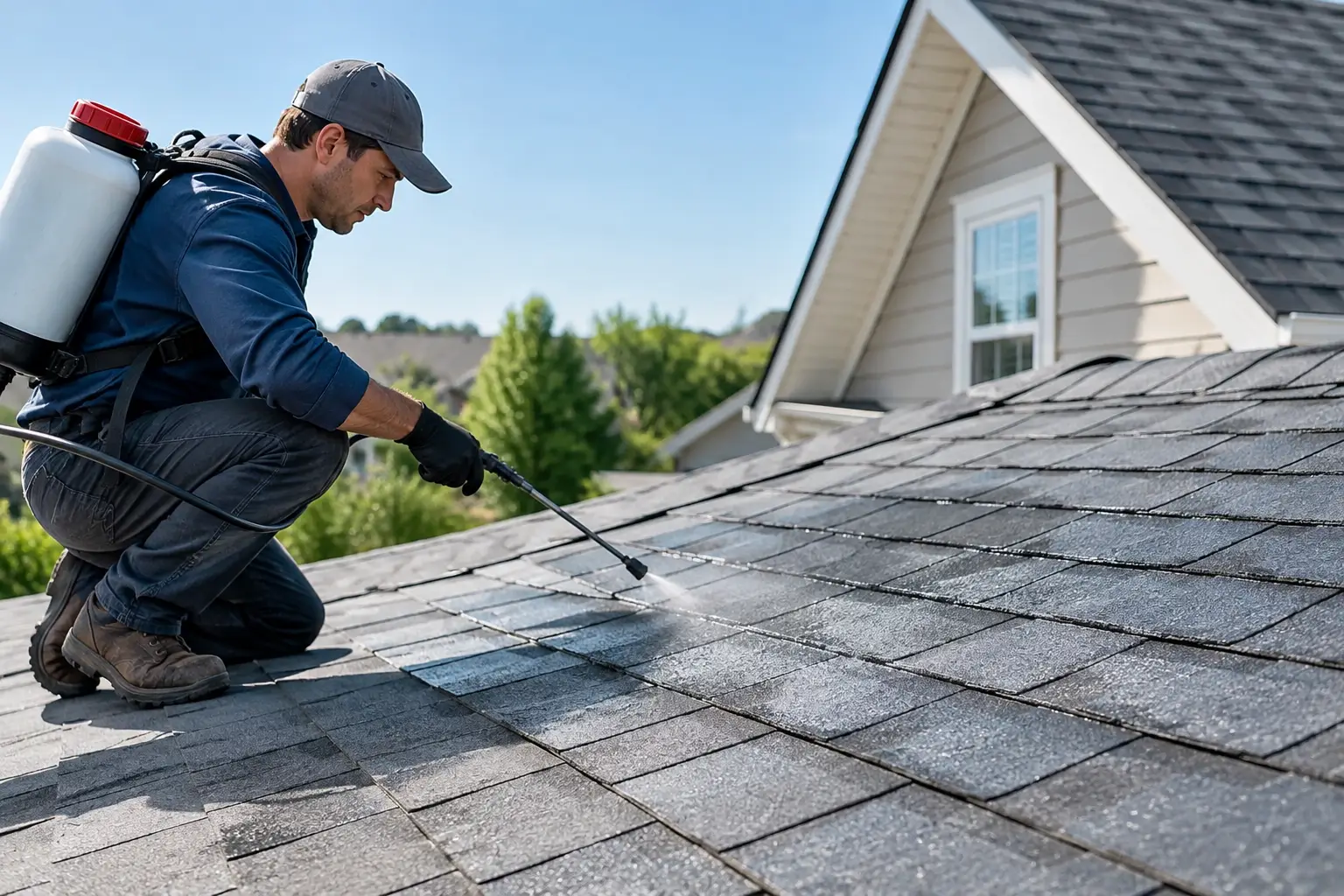
Treatment is most helpful when an insurer’s concern is visible aging rather than confirmed end-of-life failure. Rejuvenating dry, worn asphalt shingles can help restore their flexibility and protective qualities while improving curb appeal. That can make a meaningful difference when a homeowner needs to show that the roof has been maintained.
However, treatment will not solve every insurance issue. It cannot correct rotten decking, a sagging roofline, extensive storm damage, chronic leaks, improperly installed shingles, or a roof that has simply exceeded the carrier’s acceptable age limit. If an insurer requires full replacement because of a hard age cutoff, even a well-maintained treated roof may not qualify.
That is why homeowners should avoid treating insurance as an afterthought. If you have received a non-renewal notice, a request for repairs, or questions about your roof’s condition, read the notice closely and act before the deadline.
Treatment Can Support Your Documentation
A strong paper trail gives you more to work with if your insurer asks questions. Keep your roof assessment, service invoice, before-and-after photos, and any written notes about the roof’s condition. If repairs were completed before treatment, retain those receipts as well.
Documentation does not force an insurer to provide coverage. It does show that you are a responsible homeowner who addressed a maintenance concern promptly. That can be more persuasive than trying to explain a roof’s condition after a carrier has already flagged it from aerial imagery.
Treatment Does Not Reset the Roof’s Age
This is the point homeowners should understand clearly. Roof rejuvenation can extend the useful life of qualifying shingles, but it does not change the installation date on your roof. If your carrier has a strict rule for roofs over a certain age, the original age may still control its decision.
Think of treatment as a way to protect and preserve a roof with life left in it, not as a shortcut around legitimate replacement needs. When done at the right time, it can help you get more value from your existing roof and potentially avoid a premature $18,000 to $35,000 replacement project.
When a Roof Treatment Is a Smart Move Before Insurance Review
Timing matters. The best time to assess an aging roof is before you receive an urgent letter from your insurer. A proactive inspection can identify whether the roof is a good candidate for treatment, needs targeted repairs first, or has reached the point where replacement is the safer choice.
Treatment is often worth exploring if your asphalt shingles are showing dryness, fading, minor granule loss, or reduced flexibility but the roof has no major active leaks or underlying structural concerns. Homeowners who want to improve the roof’s appearance, preserve remaining shingle life, and demonstrate consistent maintenance may benefit most.
It may be less appropriate when damage is widespread or the roof is already failing. Applying treatment to a roof that needs replacement can delay the decision without solving the underlying problem. A trustworthy assessment should tell you that plainly.
Roof Shield focuses on giving homeowners a practical middle option: restore a roof that remains recoverable instead of jumping immediately to a costly reroof. The goal is not to oversell treatment. It is to help you understand whether your roof can be protected for a fraction of replacement cost.
How to Talk to Your Insurance Company About a Treated Roof
Before scheduling work specifically for insurance purposes, call your agent or carrier and ask direct questions. Explain that you are considering professional treatment for an aging asphalt shingle roof and ask what documentation they would need to review the home’s eligibility.
Ask whether they have a maximum roof age, whether they require a licensed roofing inspection, and whether they will accept photos and service records after treatment. Also ask whether there are any existing notices or deadlines on your policy. Getting the answer in writing, when possible, can prevent misunderstandings later.
After the service, submit only what the carrier requests. Clear photos, an invoice, and a condition report are often more useful than a long explanation. If the insurer still requires replacement, you will at least know where you stand and can plan based on facts rather than fear.
Can Roof Treatment Lower Your Insurance Premium?
Usually, homeowners should not expect a roof treatment to automatically lower their premium. Insurance pricing is influenced by many factors beyond roof condition, including location, rebuilding costs, prior claims, deductibles, wildfire exposure, and the carrier’s overall pricing decisions.
The more realistic benefit is preserving insurability or avoiding a coverage problem caused by an obviously deteriorating roof. That can be valuable on its own. Finding replacement coverage after a cancellation or non-renewal may be more expensive and more stressful than maintaining a roof before it becomes a red flag.
A treatment may also reduce the chance that minor shingle deterioration turns into a larger maintenance issue. It is not a substitute for homeowners insurance, but it can be part of a sensible prevention plan.
Questions Homeowners Often Ask
Will insurance pay for roof treatment?
Most standard homeowners policies do not pay for routine maintenance or preventive treatment. Coverage is generally intended for sudden, accidental damage from a covered event, subject to your policy terms. Roof treatment is typically a homeowner-funded maintenance decision.
Can I treat my roof after receiving a non-renewal notice?
Possibly, but do not assume it will satisfy the insurer. Review the notice, confirm the deadline, and ask what evidence the carrier requires. If the roof is still recoverable and the insurer accepts maintenance documentation, treatment may help. If replacement is specifically required, treatment alone may not be enough.
Is a better-looking roof enough for insurance approval?
Appearance helps, especially when it reflects improved maintenance, but insurers are concerned with performance and risk. They may still evaluate roof age, leaks, shingle integrity, repairs, and structural condition.
If your roof is aging but not yet ready for replacement, do not wait for an insurance letter to force a rushed, expensive decision. A professional roof assessment can show whether rejuvenation is a sensible way to protect your home, improve its appearance, and give you useful documentation for the road ahead.